Simple Fall Sensory Bins: 10 Easy Setups Kids Actually Play With
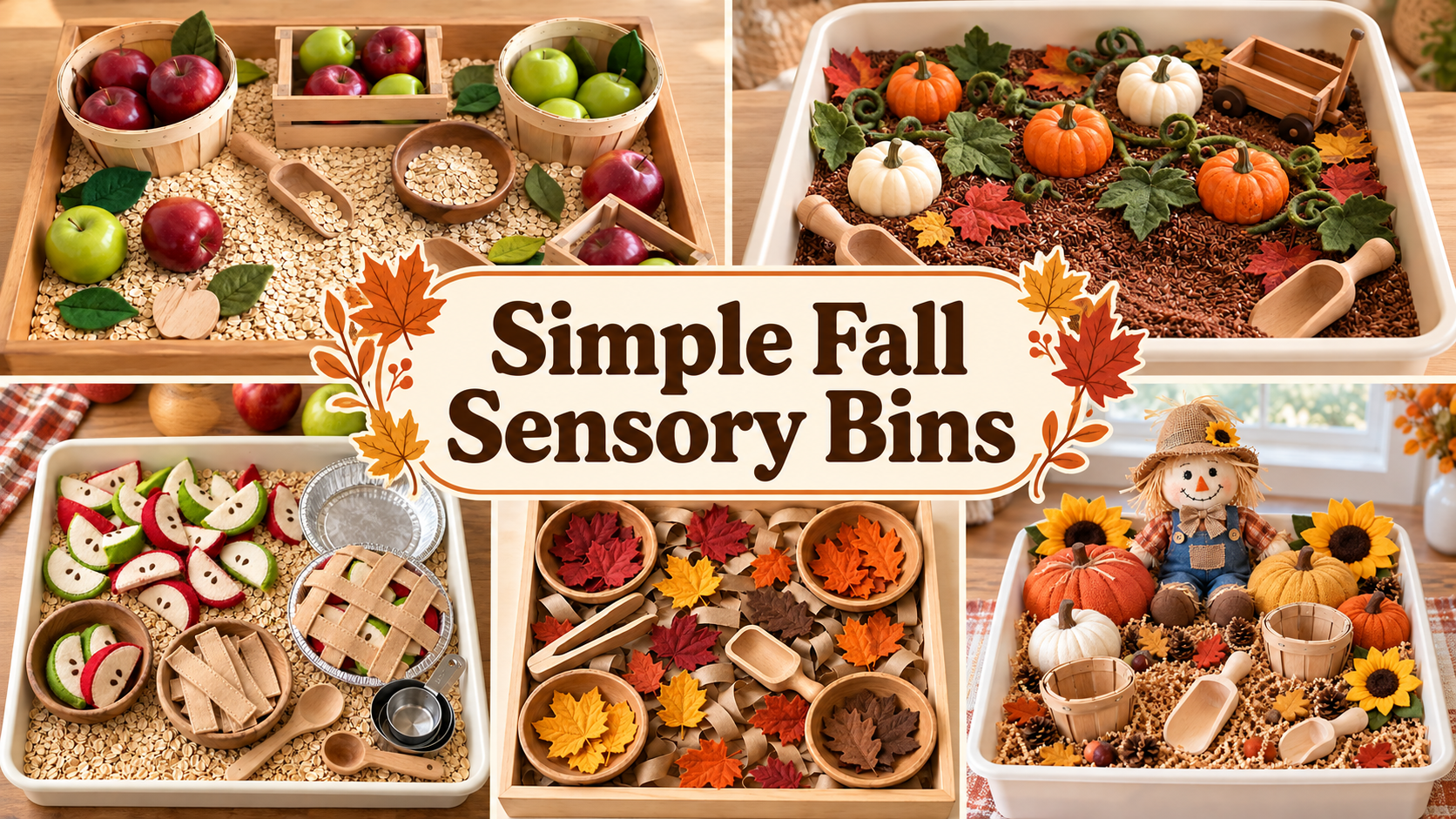
The best sensory bins I've ever set up took about five minutes and used things already in the pantry. A shallow bin, one filler, a few tools, and a couple of loose parts is genuinely all it takes. What turns that into rich learning isn't the number of materials — it's the room you leave for a child to make something of them.
The formula: bin + filler + tools + a few pieces
Every bin below follows the same four-part structure, which is why they come together so fast.
The bin. Shallow, wide, and low enough for little arms to reach the far corner. An under-bed storage tub, a baking pan, or a plastic dish tub all work.
The filler. Dry oats, brown rice, torn kraft paper, crinkle paper, or shallow water. One filler per bin — resist mixing.
The tools. Scoops, cups, tongs, spoons, small bowls. Tools are where the fine motor work hides.
The pieces. Pretend apples, animal figures, felt leaves, a toy tractor. Five to eight is plenty. More than that and children spend their time sorting the clutter instead of playing.
Six fall bins to start with:
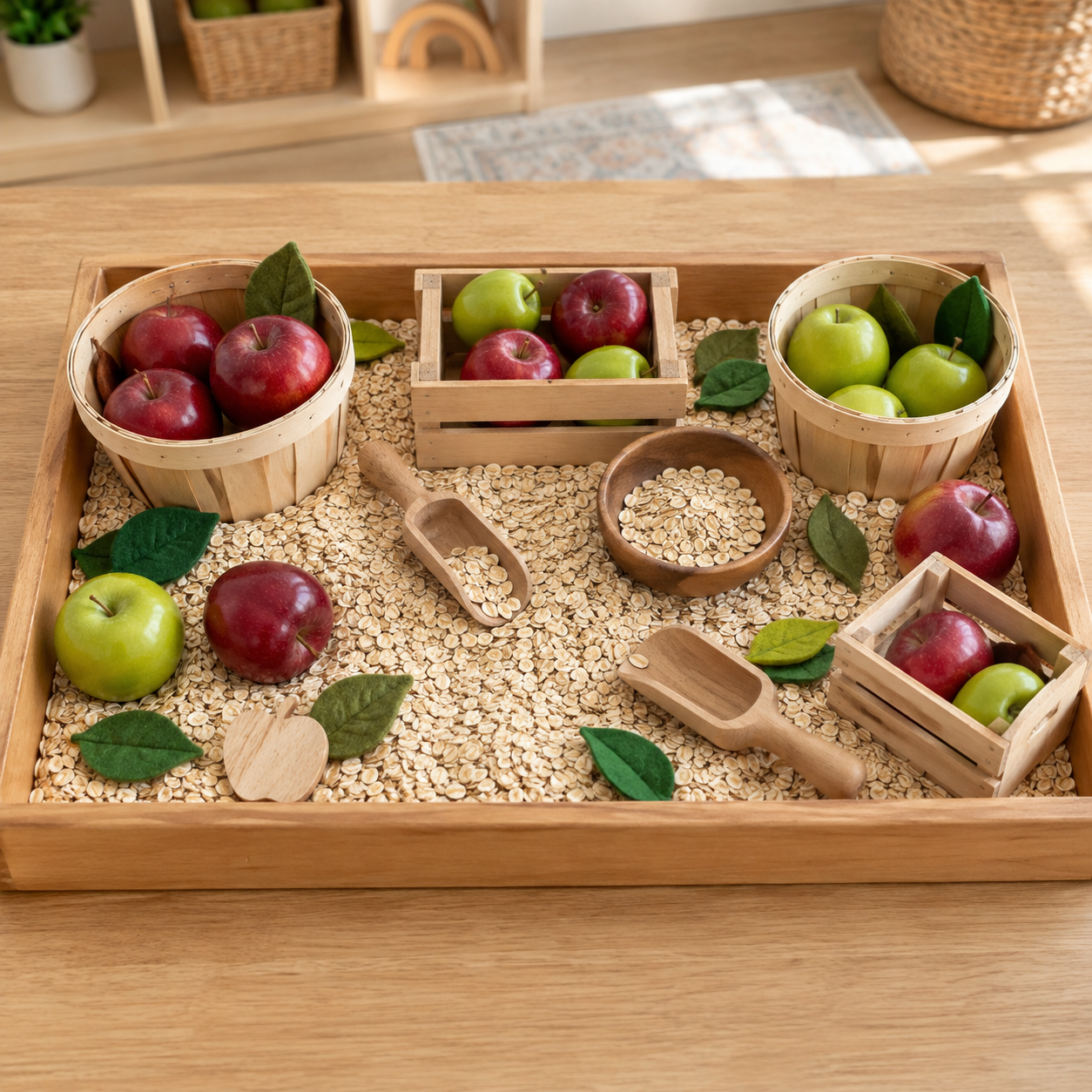
Apple Orchard
Fill the bin with oats and add pretend apples, small baskets, felt leaves and a scoop. Children sort apples by color, count them into baskets, and scoop oats between containers. You'll see sorting, counting and hand-eye coordination without ever naming any of them out loud.
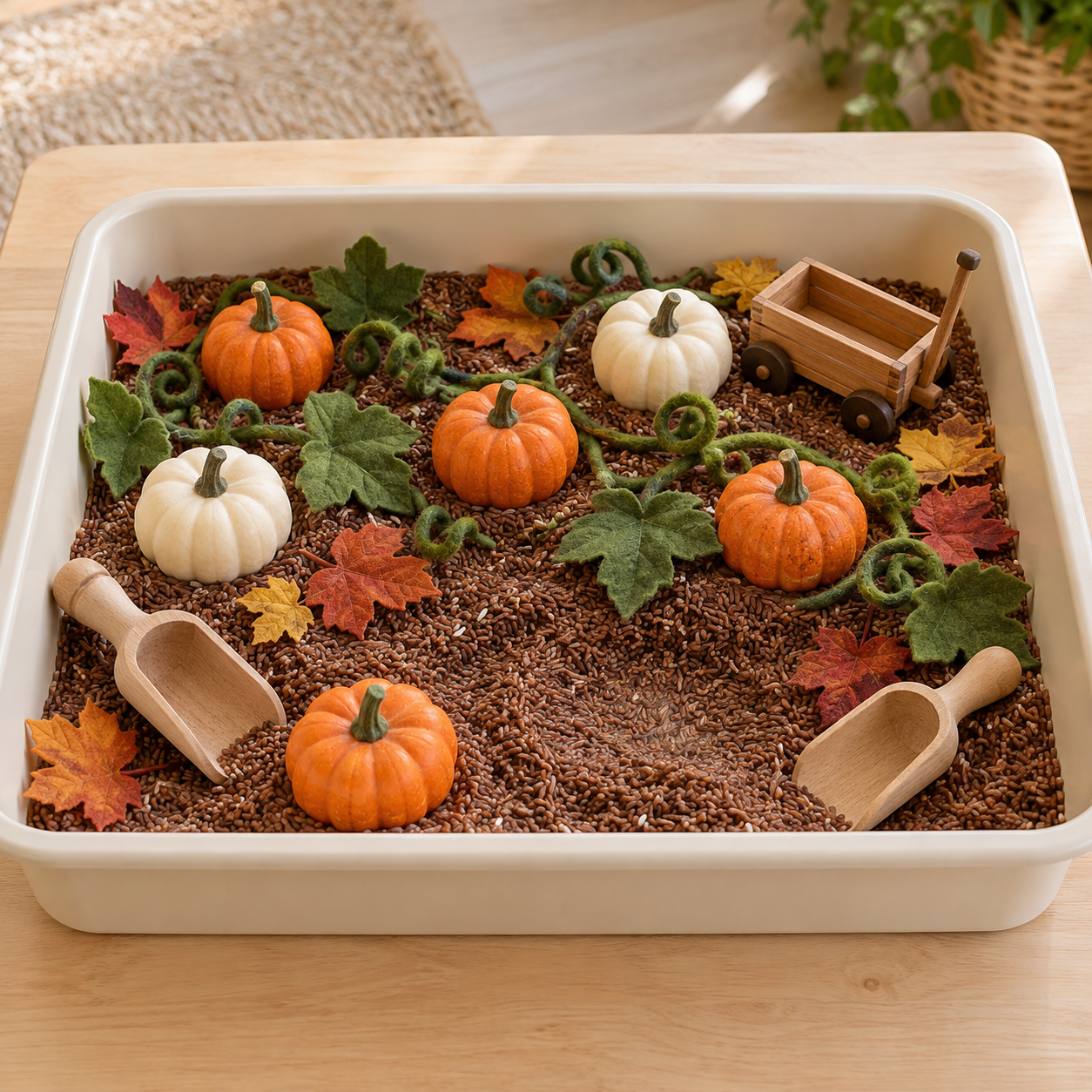
Pumpkin Patch
Dry brown rice, a handful of pretend pumpkins, felt vines and a toy wagon. Invite children to plant pumpkin rows and load the wagon. This one is quietly full of math language — bigger, smaller, next to, behind — because comparing pumpkins is irresistible.
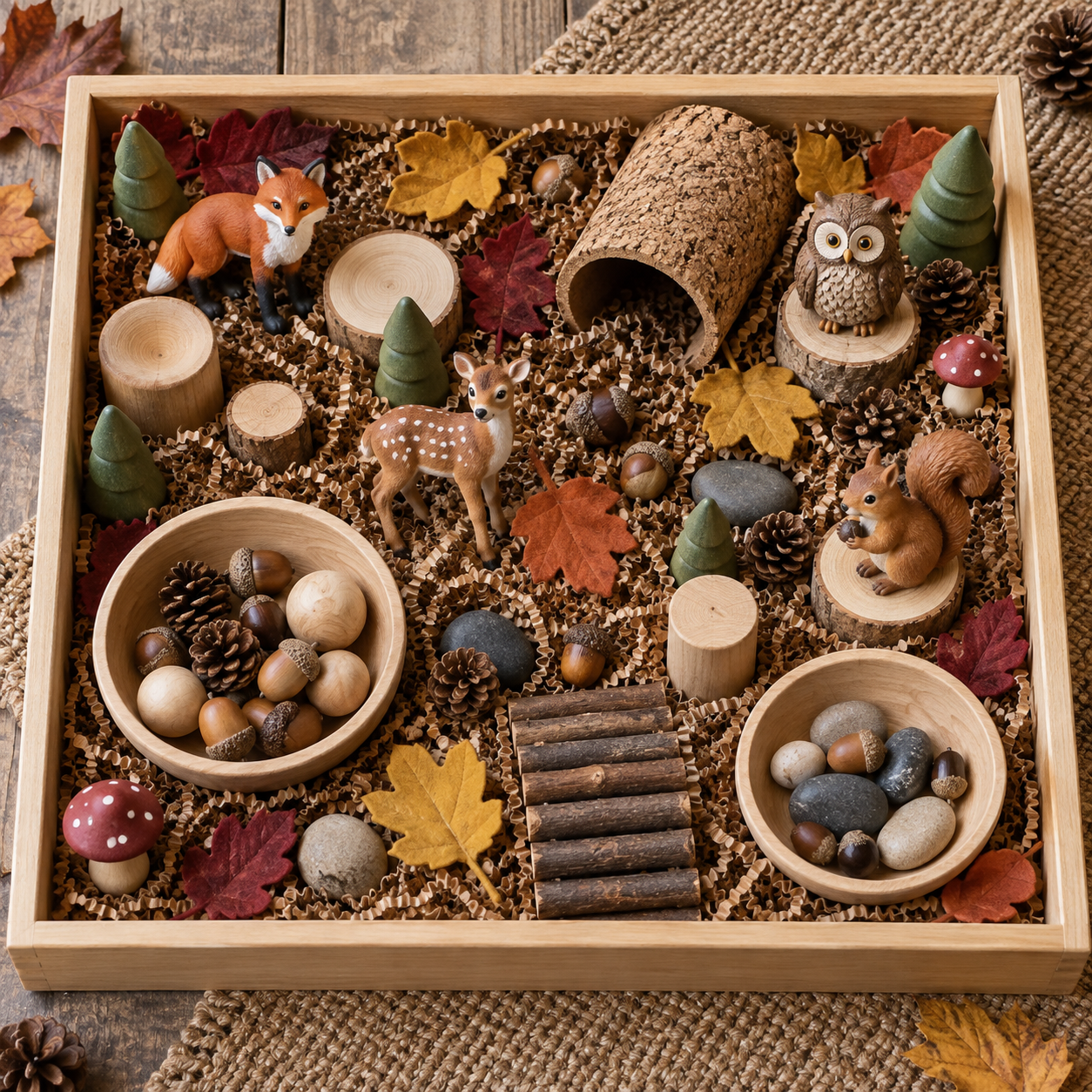
Autumn Woodland
Crinkle paper, a few blocks, fabric leaves, woodland animal figures and a cork tunnel. Children build a forest, move animals through the tunnel, and narrate what happens next. Storytelling bins like this one tend to hold attention the longest, because the play has somewhere to go.
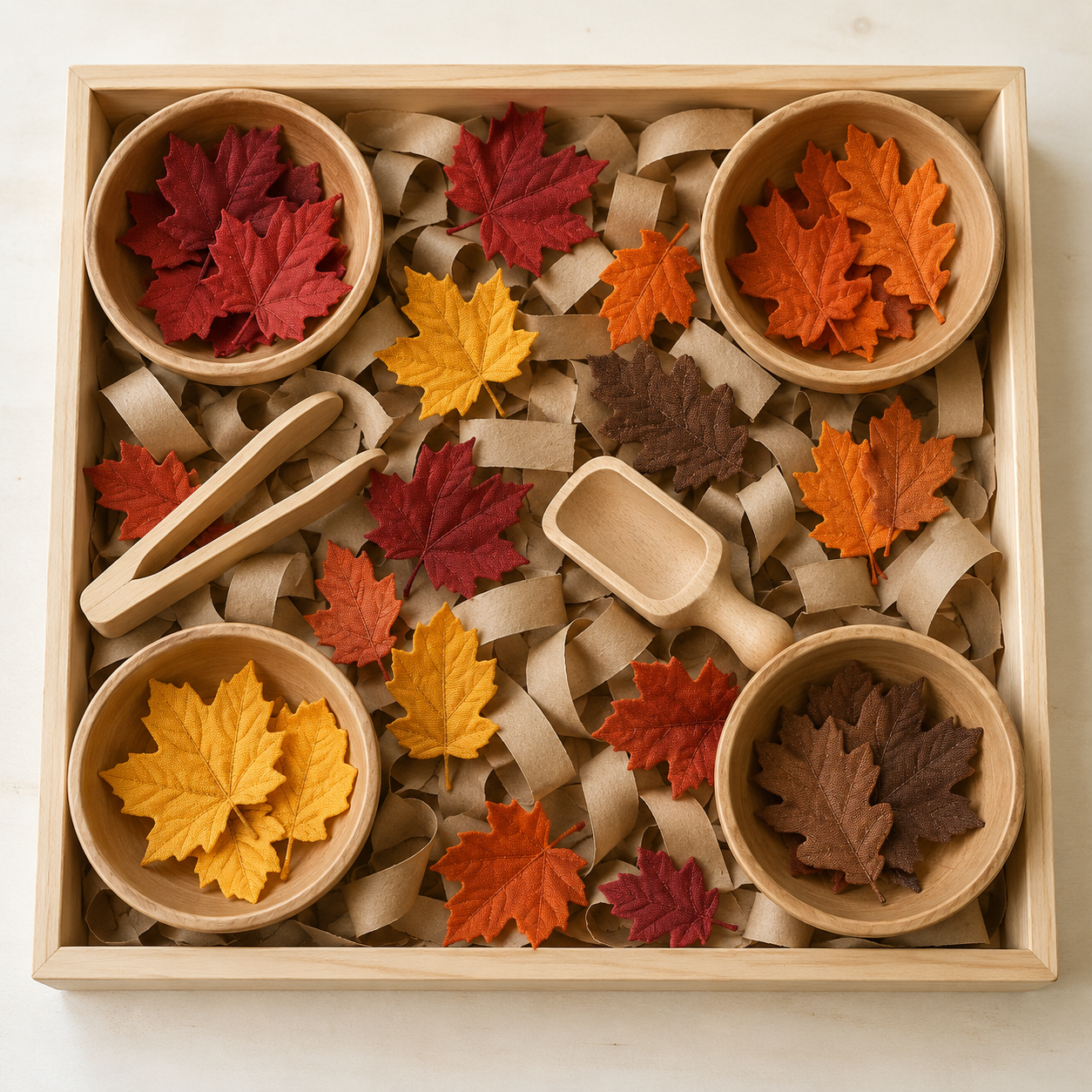
Autumn Leaf Sorting
Curled kraft paper, large fabric leaves, four bowls and a pair of tongs. Start by sorting leaves by color. When that gets easy, change the rule: now sort by shape or size. That shift — same materials, new category — is real cognitive flexibility practice, and children love catching on to it. You can also use real leaves for this too!
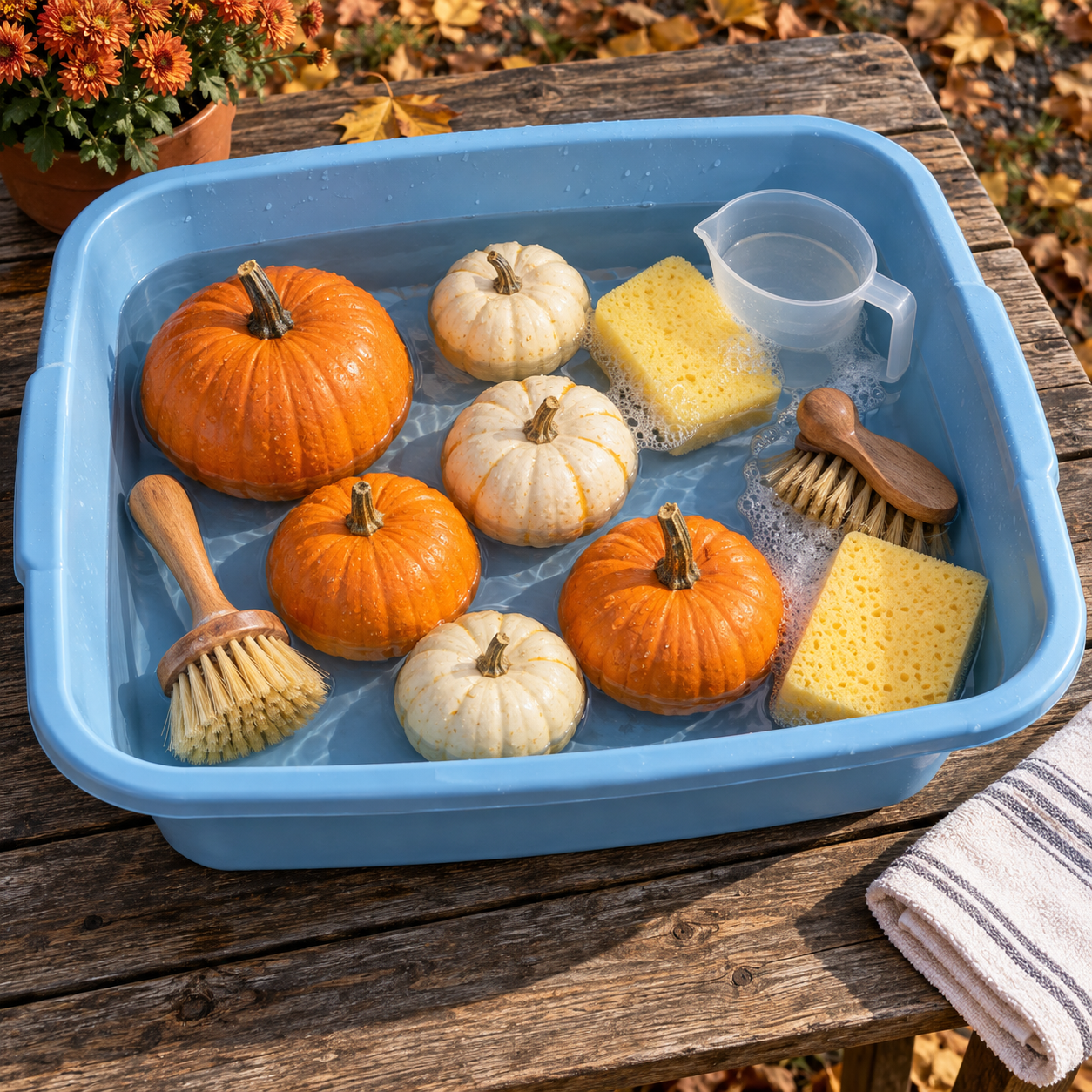
Pumpkin Washing
A few inches of water, small pumpkins, chunky brushes, sponges and a towel. Scrub, rinse, dry. Squeezing water from a sponge is a two-handed workout, and the sequence gives the play a natural beginning and end. Stay within arm's reach, and empty the tub when you're done.
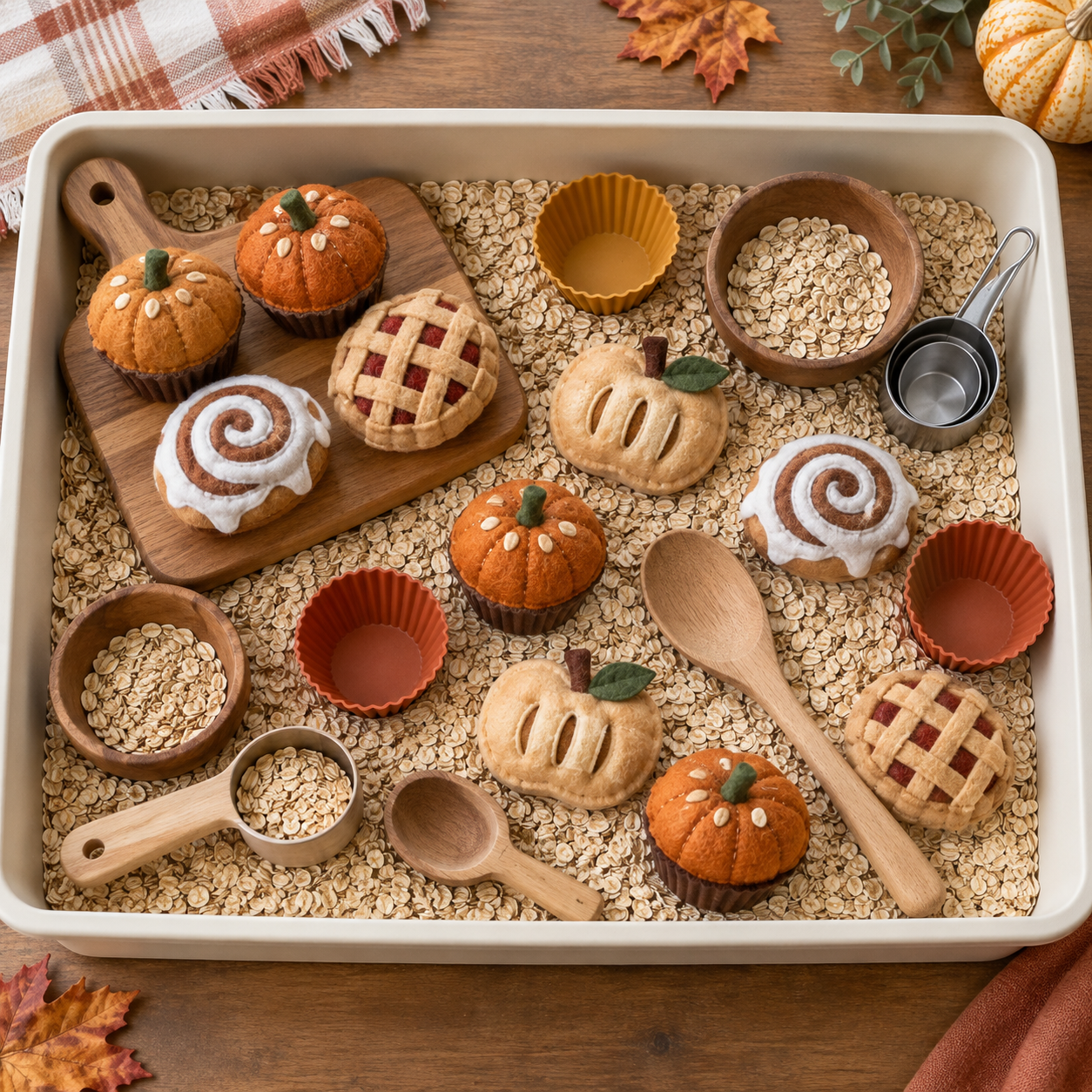
Fall Bakery
Oats, felt muffins, silicone cupcake liners, bowls, cups and spoons. Children fill liners, arrange a display, and start taking orders — which is where the counting and turn-taking sneak in. Expect to be handed a great many pretend muffins.
The other four — Fall Harvest Farm, Cozy Apple Pie, Friendly Scarecrow, and Fall Forest Animal Homes — are in the free printable at the end of this post, along with the full materials list for every bin.
Two things that make sensory play go better
Let the bin stay out. A sensory bin that lives on the table for a few days gets returned to again and again, and the play deepens each time. Day one is exploring. Day three is storytelling.
Contain the mess before it happens. A large towel, an old sheet, or a tray under the bin makes cleanup a shake-out instead of a sweep. Give children a small dustpan and they will happily do most of it themselves.
Keeping it safe and accessible
Choose pieces that suit your child's age and mouthing habits. If a child still explores with their mouth, offer tongs and scoops instead of direct contact, or swap in a taste-safe filler. Check for food allergies before using oats, rice or pasta. For water play, supervise closely and empty the tub right away.
If a child finds a texture overwhelming, that's useful information — not a failure. Offer a tool so they can engage without touching, reduce the number of materials, or try a dry option first.
Grab the free printable
I turned all ten bins into a two-page printable you can keep on the fridge or in your planning binder. Each one lists what to gather, what to try, and the skills it builds — plus photos of every setup, so you can see exactly how simple they really are. Grab your copy by clicking on the green download button below!